
Jiangsu ANXIN Logistic Equipment Co., Ltd

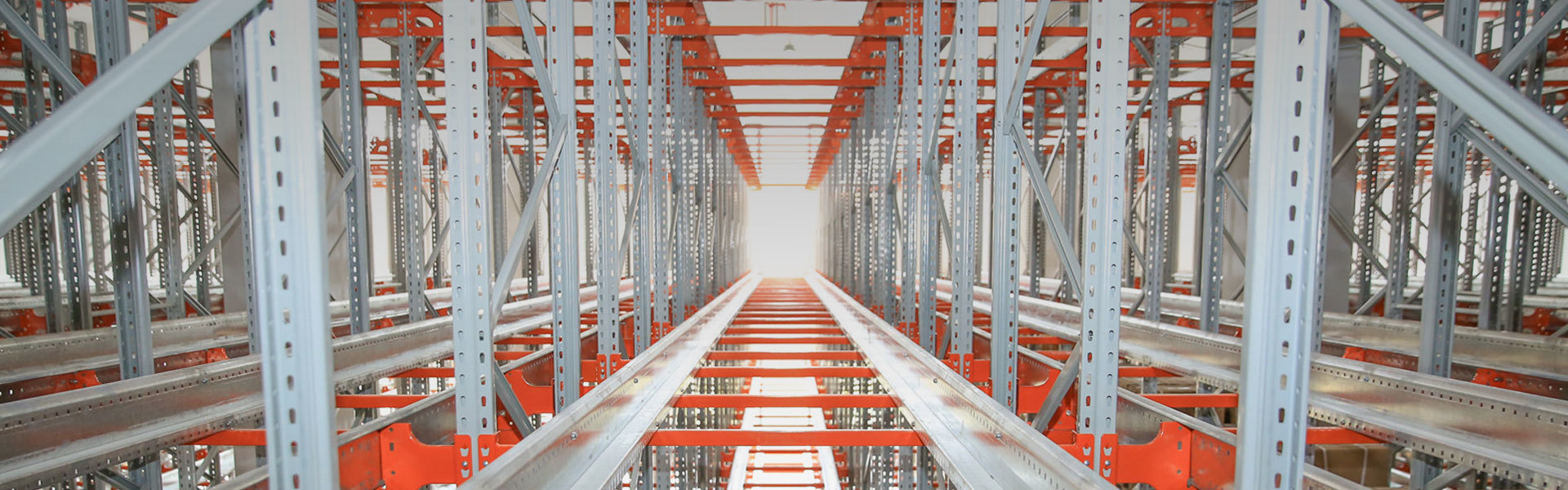
Shelf industry standardization construction
As an important storage equipment, shelves are an important tool to modernize warehouses, improve logistics efficiency, and reduce storage costs. They play a very important role in modern logistics activities. With the rapid development of China's logistics industry, the demand for shelves has increased significantly, and the scale of the shelf industry has continued to expand. A number of outstanding shelf manufacturers have emerged. They have developed various series of shelves based on different material size, weight and access method requirements. Shelf products. Standardization construction plays an important guiding and standardizing role in the production, sales, and after-sales work of shelves. However, due to the late start of my country's shelf industry, the lack of relevant standards has brought considerable trouble to the entire industry, resulting in chaotic market competition and the prevalence of non-standard projects, which has restricted the healthy development of the shelf industry and the growth of large-scale enterprises. Under this circumstance, the construction of shelf standardization has received great attention in recent years, attracting the active participation of many shelf companies. A number of new standards have been produced, and more standards are being formulated as soon as possible.
The current situation of the formulation of domestic shelf standards
Currently, there are 6 officially implemented shelf standards in China, including: "Specifications, Dimensions and Rated Loads of Industrial Shelves" (GB/T 27924-2011), "Design Calculation of Industrial Shelves" (GB/T 28576-2012), "Logistics Warehouse Shelf Storage Coding" (SB/T 10846-2012), "Metal Lightweight Combination Shelves" (SB/T 10166-1993), "Drive-In Shelves" (WB/T 1045-2012), "Shelf Classification and Codes" (WB/T 1043-2012). These standards focus on making clear provisions on the basic contents of product quality, design, production, installation and acceptance of various types of shelves, so that there are unified acceptance standards between shelf manufacturers and between buyers and sellers, so that both parties can It can communicate more effectively, avoid disagreements caused by different standards, and minimize the risks caused by disagreements. At the same time, the formulation of these standards has also promoted the integration of my country's shelf industry with international standards, promoted the development of international trade, improved the overall level of products, and laid a foundation for domestic shelf products to establish a good reputation in foreign markets.
In addition to domestic standards, there are also some shelf companies that refer to relevant foreign standards for production, including: Japan's "Technical Conditions for Welded Steel Structure Shelves in Three-dimensional Warehouses" (JB/T 5323-91), "Design of Rail Tunnel Type High-rise Shelf Warehouses" Specification" (JB/T9018-1999), the European Union's "Design Specification for Rail Tunnel Stacking Cranes - Tolerances, Deformations and Clearances of Elevated Warehouses" (FEM 9.831), "Design of Static Steel Shelves for Pallets" (FEM10.2.02), The United States' "Safety Specifications for the Use of Industrial and Commercial Steel Shelves" (ANSI/MH10.21984), "Specifications for the Design, Testing and Application of Steel Shelves for Industrial Storage" (MH16.1-2004) and other standards.
In addition, the national standards for shelves that have been approved include: "Specifications for the Use of Storage Shelves" (National Standard Project Number: 20100330-T-469), "Gravity Shelves" (National Standard Project Number: 20100360-T-469), "Cantilever Shelves" Shelves" (National Standard Project Number: 20100355-T-469), "Integrated Warehouse Shelves" (National Standard Project Number: 20100338-T-469), "Shelf Shelves" (National Standard Project Number: 20100335-T- 469), "Shelves for Cold Storage" (National Standard Project Number: 20100339-T-469), "Design Specifications for Three-dimensional Warehouse Shelf Systems" (National Standard Project Number: 20140861-T-604). Among them, the national standards "Specifications for the Use of Storage Shelves", "Cantilever Shelves", and "Specifications for the Use of Storage Shelves", proposed by the National Logistics Standardization Technical Committee and co-ordinated with the National Logistics and Warehousing Equipment Standardization Technical Committee, and jointly researched and formulated by Nanjing Yinfei Storage Equipment Co., Ltd. and other units The "Technical Conditions for CNC Lift Cabinets" and "Gravity Shelves" were completed in November 2014 for comments.
Things to note in standardization work
Since China's shelf industry started late, the standard formulation work also lags behind foreign countries. Currently, there are some typical problems in the formulation of shelf industry standards, which are specifically reflected in:
(1)Standards for the sake of standards
With the guidance of national policies and the rewards that participation in standard formulation brings to enterprises, more and more shelf companies are actively participating in standard declaration and formulation work, which is undoubtedly a good thing for the promotion and development of standardization work. But at the same time, many companies apply for and formulate standards in order to participate in standards work, resulting in uneven standards setting levels and disrupting the order of standard setting.
(2) Individualism
In the process of standard preparation, some enterprises lack overall and systematic concepts and easily limit the scope of standard preparation within the framework of their own enterprise's development level. The content of the standard hides the characteristics of the company's products everywhere, making it impossible to truly find industry commonalities, resulting in standards Difficult to gain recognition due to poor applicability.
(3) Copying things mechanically
China's standardization work started late and lacks experience. When many standards were first formulated, the same or similar international standards or standards from other countries already existed. We can learn from these standards, learn their concepts and methods, and refer to their frameworks, but we cannot directly copy foreign standards without considering the actual domestic situation, making the standards incompatible with China's characteristics.
Experts point out that for shelf standards, two most basic issues need to be paid attention to: one is size, and the other is the balance between quality and cost, which must be integrated into the "soul" of the entire shelf standard. Based on the current standardization status of my country's shelf industry, relevant companies should focus on the following work when participating in the formulation of standards:
First, goal definition
The most important part of standard setting work is the definition of goals. Other work, whether it is data collection, standard demonstration, or feedback, are all methods and measures that need to be used to achieve the goal. Only by correctly understanding the purpose of setting standards and the problems that need to be solved can other series of work around this goal be meaningful.
Secondly, data collection
In the process of standard formulation, data collection is also a very important link. Before starting the drafting of standards, it is necessary to focus on collecting information from the following three aspects: (1) Relevant laws and regulations. Only by clearly understanding the relevant laws and regulations involved in the content of the standard can the rationality and legality of the standard formulation be guaranteed. (2) Standards and specifications related to standard writing. Only by being familiar with the standards and specifications related to standard writing and proficiently using the format and wording of standards can the standard drafting work be more effective with half the effort. (3) Relevant domestic and foreign standards. Only by being familiar with domestic and foreign standards related to standards can we avoid duplication and conflicts with other standards, and learn from the experience of writing other standards to ensure the advanced level of standard formulation.
Third, feedback
In the process of setting standards, they are mainly drafted and revised by members of the drafting group, which are inevitably restricted by personal levels. Therefore, special attention needs to be paid to the feedback from all walks of life in the standard setting process. Feedback comes from all walks of life, representing not only the opinions of peer companies, but also the opinions of upstream suppliers and downstream users, which can truly reflect the demands for standards. Therefore, all feedback should be paid enough attention, the opinions adopted should be fully affirmed, and the opinions not adopted should be given reasonable explanations. Only by broadly accepting the opinions of all parties can standards be recognized by the public.
In addition, judging from the project construction status of the shelves, the shelf system has shown the following development trends in recent years, which should be considered in the formulation process of shelf standards:
First, individual projects are becoming large-scale: there are more and more single shelf projects worth tens of millions of yuan. In recent years, there have even been large orders of more than 50 million yuan or even more than 100 million yuan for a single shelf project.
The second is the development from a single product to a systematic application: With the continuous increase in application industries and application methods, shelves are no longer a simple storage tool, but have evolved into a comprehensive warehousing and storage system that integrates diverse and complex functions. Logistics system.
Third, new products are constantly emerging: At present, cold chain, pharmaceutical and other industries are industries that the country is vigorously developing, and shelf companies have begun to develop new storage equipment suitable for these industries. For example: mobile shelves widely used in cold storage, automated storage systems with remote-controlled shuttle cars for intensive storage, etc.
The above-mentioned market changes have put forward new demands for shelf standardization, including structural standards, specification and size standards, safety standards, installation and after-sales service standards for shelf products, etc. These should all be considered in shelf standardization work to achieve Keep pace with the times and meet the requirements of industry development and related enterprises.