
Jiangsu ANXIN Logistic Equipment Co., Ltd

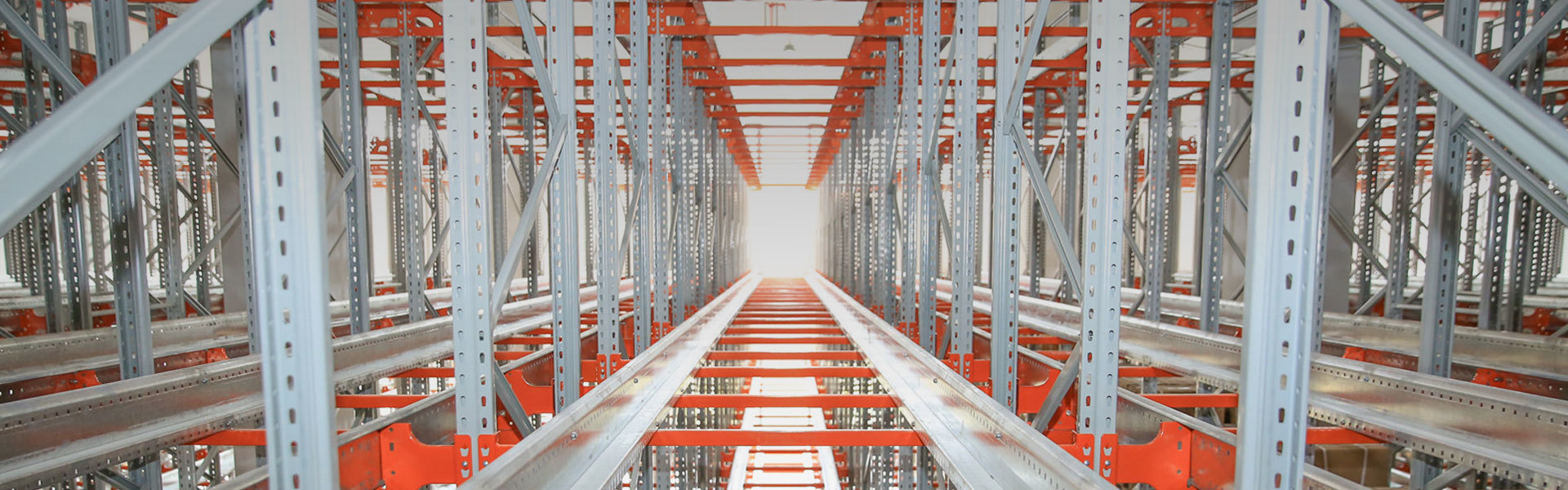
Mass customization is an important way out for shelf manufacturing
Since this year, "Internet +" has become popular, and it is not surprising that "Internet +" logistics equipment has emerged. In fact, everyone's understanding of this is different due to their different perspectives. The author's understanding is more towards how in the Internet era, logistics equipment can be rapidly upgraded with the help of the Internet to adapt to the increasingly fierce market competition.
One obvious difference between the Internet era and the traditional era is that distance is closer and time is faster. For the manufacturing industry, due to the trend of personalized market demand, the past "large-scale production" is transforming into "mass customized production". At the same time, the market must form full information coverage.
Shelves are one of the most important products of logistics equipment. China has become the absolute number one in shelf production in the world. The annual demand in the logistics and warehousing industry alone is more than 1 million tons. There are no less than 300 shelf companies of various sizes, and some of them have a certain scale. There are about 10 enterprises. However, like other manufacturing industries in my country, the trend of product singleness and homogeneity is obvious, leading to endless price wars and a harsh living environment for the entire industry. Declining quality and safety concerns have become the biggest obstacles to the healthy development of the industry.
So, as a shelf manufacturer in the whirlpool, is there any good strategy to avoid this kind of homogeneous competition? The answer is obviously yes, but it is not easy to do this.
Manufacturing is not as simple as imagined
Many people, including those in the industry, believe that shelf production is very simple and has little technical content. But is this really the case? No.
Due to work, the author has come into contact with many shelf manufacturing companies. They include both large-scale companies and companies with very small annual output. In the process of communicating with them, it is obvious that they are under pressure from disorderly competition in the market. The reason is none other than its misunderstanding of the technical difficulties of the shelves themselves, which leads to serious product homogeneity and lack of core competitiveness.
It is true that the production of shelves is relatively simple compared to stackers, AGVs, sorters and other products, but the shelves themselves have profound requirements for load-bearing, earthquake resistance and deformation. Theoretical basis. In addition, the surface treatment, adaptability, durability, extreme temperature resistance, extreme environment resistance, structural rationality, material selection, installation requirements, etc. of the shelves all require professional knowledge and skills. However, few people have a deep understanding of this.
The production of many low-quality shelves in our country is precisely based on this understanding. The author once visited the logistics center of a well-known e-commerce company. The shelves did not meet the requirements at all. Not only were the materials used extremely sloppy, cut corners, and the production was rough, but the installation was extremely irregular. The entire shelf felt shaky and dangerous.
Many companies rush into shelf manufacturing, which means they underestimate the technical content of the shelf itself and believe that the threshold for shelf manufacturing is very low and the investment is very low. They do not pay attention to scientific research investment, theoretical calculations and scientific experiments, and they do not pay attention to targeted design. They only blindly copy. As a result, the shelves they produce often have a waste of materials, do not meet the usage requirements, have major defects, and have poor basic performance. A series of problems such as compliance with requirements and poor quality. Some have also experienced major safety accidents. The multiple shelf collapse accidents exposed in the past few years fully illustrate this point.
In the future, mass customization will be favored
Back to mass customization, it includes two meanings: mass customization and mass customization. Large-scale refers to the production volume, and customization refers to individual needs. The two seem contradictory, but they are the basic trends of the future shelf market. SSI SCHAEFER, the world's top logistics system integrator well known in the industry, not only started with the production of shelves, but one of its main businesses is still the production and manufacturing of shelves.
Therefore, in a fiercely competitive environment, it is difficult to survive and develop without economies of scale. It is foreseeable that most of the small and micro shelf manufacturers that are currently struggling to survive in the country, like other fields, will face the risk of elimination or integration.
Therefore, shelf companies must adopt differentiated strategies to develop and grow. In the shelf manufacturing companies, in the past, differentiation was simply understood as superficial differences, such as differences in column sizes, hole shapes, etc. How is this innovation? It is simply a fool's errand.
The differentiation of shelves should fundamentally follow the path of standardization. Unifying sizes and standards is a top priority. The connotation of difference should be an accurate understanding of different customer needs, which should be reflected in the scientific nature of design, diversity of forms, accurate adaptability to targets, standardization and serialization of basic components, rapid response to production, etc., and should be reflected in the production process. Work hard on craftsmanship, material selection, and scientific experiments. It is necessary to strictly control costs and put safety first.
First of all, the production methods of shelves are very important. To produce high-quality shelves, not only complete pre-treatment methods are required, but rolling, rust removal, surface spraying, and baking are also key. It is understood that many large-scale production plants have introduced foreign production lines, which has greatly improved the quality of shelves and effectively controlled costs. This will put tremendous pressure on other manufacturers.
Second, the automation of shelf production is one of the future development directions. For example, the use of fully automatic rolling mill production lines and the use of a large number of welding robots to complete beam welding have had very obvious effects on improving product quality and reducing costs.
Third, the introduction of new materials is also one of the contents of personalization. For example, the cost of galvanized sheet technology, which is currently widely used, will be significantly reduced, which should attract the attention of the industry.
Fourth, the development of new products should be a long-term task. my country's shelf products have seen many innovations in the past 10 years. Ruyinfei's development of partition shelves is a typical representative. However, shelf products lack more innovation in terms of broad adaptability, and product diversity is also very limited. The currently popular shuttle shelf will be a breakthrough, and the research on dense shelves has also entered a new period.
Fifth, the restlessness and restlessness of enterprises in the market bring greater risks to the survival and development of enterprises. It is typical that some equipment manufacturers now want to become system integrators, and some integrators are also competing to produce equipment. The same is true for shelf companies.
If we only analyze it from the perspective of market profitability, this phenomenon is justifiable. The aforementioned SSI SCHAEFER is a typical case of successful transformation. After 2000, SSI SCHAEFER successfully transformed from a shelf and warehouse manager through multiple acquisitions. A turnover box manufacturer transformed into one of the world's leading system integrators.
But on the other hand, this is a very dangerous phenomenon. If a company rushes into areas that it is not good at, it may divert too much energy from focusing on the areas it is good at, and miss opportunities for intensive cultivation. The company may also be unable to successfully complete its transformation due to changes in market demand. Therefore, perhaps a few years later we will find that collaboration and division of labor between enterprises is the right way to become bigger and stronger.